Altar participants
Greetings.
Thank you for your interest in participating by creating an altar.
The altars are truly heart and soul of this important cultural event.
Below is detailed information regarding the altar program in case you are interested in participating in 2026.
Important notice !
Please note that selling merchandise at the altar sites is strictly prohibited. Violators will be removed from the premises.
Altar Contest
2025 Altar Contest WINNERS
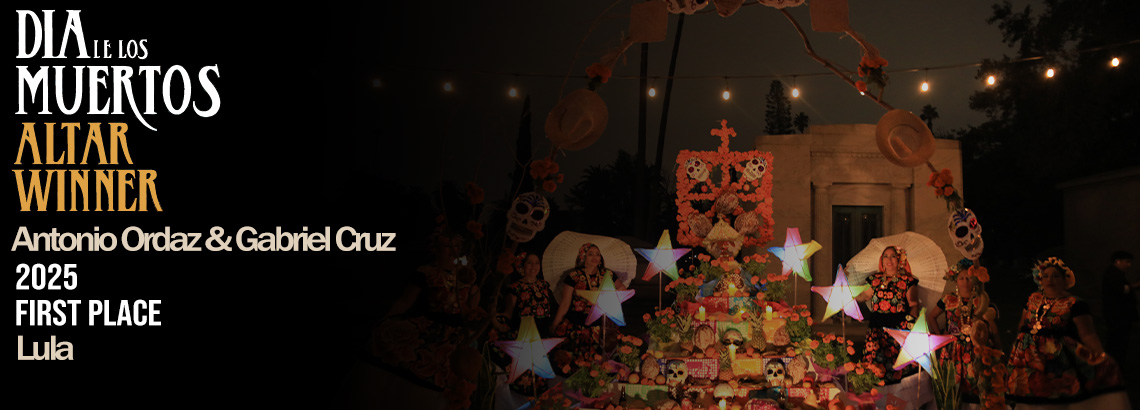
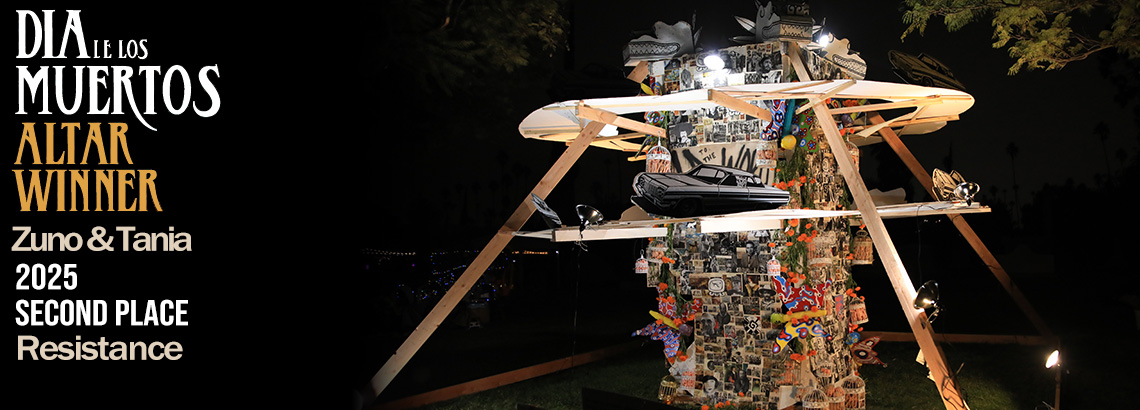
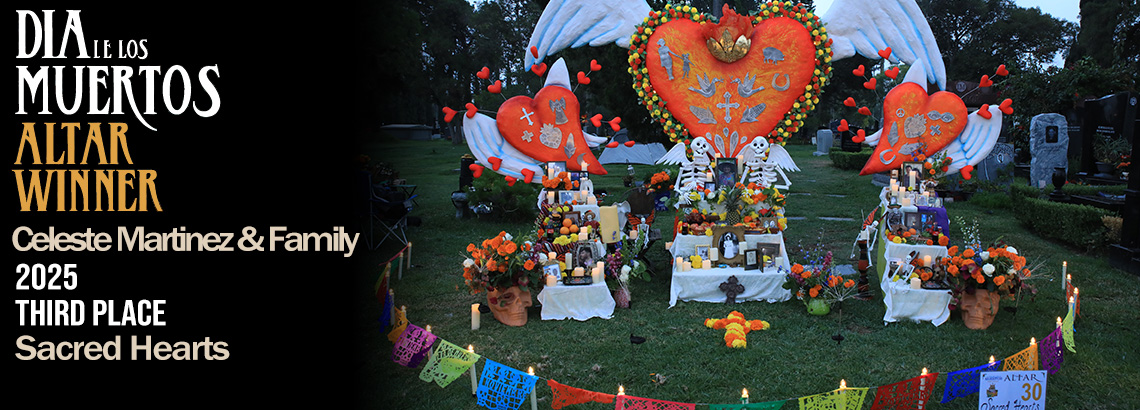
There are 3 steps to reserve an altar SITE:
- Fill out the online application form
- Complete and email the Credit Card Authorization Form.
- Fill out Waiver Form and submit to altars@ladayofthedead.com
(Altar no shows and Altar spaces that are not cleaned up after the event will be charged $150 to the credit card on the submitted authorization form.)
Once you have filled out the online Application Form and submitted the Credit Card Authorization Form and Waiver Form via email, you will receive a confirmation with altar space number and further instructions.
Before filling out your application, please read through the following rules and instructions:
- Cancellations must be made 72 hours in advance of the event to receive your deposit check.
- As of a new policy this year, there will be a charge of $150 for no shows and for altars that aren’t cleaned up. Download credit card authorization form from sign up form page, fill out and send in.
- We STRONGLY encourage you to start building your altar the day before the event, or at least drop off your altar supplies. You can start setting up as early as Friday, October 23 at 10 am.
- You are allowed to work through the evening. There will be free food and drink for altar teams on site Saturday morning.
- Please be respectful of the altar space by bringing large trash bags to clean your space. Please do not leave a trace of trash. Those with altar spaces not left clean of trash and debris will lose their deposit and will not be allowed to return the following year.
- On Saturday, October 24th, 2026, you must be inside the cemetery by 10am at the latest. No vehicles will be allowed after that – NO EXCEPTIONS – remember, gates will open to the public at 12pm. This is a Fire Department requirement. Please plan ahead, arrive organized and as early as possible for an enjoyable setup-experience. Thank you.
- Once you enter the cemetery find your name and numbered space on the map (the pink numbers), unload your supplies and IMMEDIATELY MOVE YOUR CAR to the designated OFF SITE parking spaces. We urge you to PLEASE! Arrive on time as we have to turn away late arrivals.
- The Fire Department doesn’t allow the burning of candles! You can illuminate your altar with battery powered candles or otherwise.
- Altar height is limited to a maximum of 12 feet.
- Electricity will be provided – bring a 14-gauge 75-foot grounded extension cord with you to connect.
- We allot 5amps of 110v power per altar – if you need more power, please let us know in advance – if you are upgrading also make sure to bring a 12-gauge 75-foot grounded extension cord.
- Only altars completed by 12pm October 24th, 2026 will be considered for the contest.
The winners will be announced at the evening on the stage at 9pm
We want to thank you for your participation with this amazing event. We look forward to working with you. If you have any questions, please contact us.
Thank you.
Angie M. Jiménez
Director & Curator of Altar Program
angie@LAdayofthedead.com
Creating your Altar (Ofrenda)
One of the most meaningful traditions of Día de los Muertos is the creation of an ofrenda, or offering altar. Through the artistic display of altars and the decoration of gravesites, families honor and celebrate the lives of loved ones who have passed. Far more than a memorial, the ofrenda serves as a bridge between generations, reflecting the love, memories, and enduring connection shared with those who came before us.
Each altar is unique and can be created in countless ways, reflecting personal memories, family traditions, and creative expression. While every ofrenda tells its own story, many incorporate the four sacred elements of nature: Earth, Wind, Water, and Fire.
Earth (Tierra)
Earth is represented through crops, fruits, flowers, bread, and favorite foods. These offerings symbolize the nourishment provided by the land and are placed on the altar to welcome and sustain the returning souls. The aromas and flavors of these earthly gifts are believed to comfort and delight loved ones on their spiritual journey.
Wind (Viento)
Wind is often represented by papel picado, the colorful cut-paper banners that gracefully move with the air. Their delicate motion symbolizes the presence of the unseen, reminding us that although spirits may not be visible, they are felt through memory, love, and tradition.
Water (Agua)
A vessel of water is placed on the altar to quench the thirst of the soul after its long journey home. Water also represents purity, renewal, and the cleansing of the spirit, offering comfort and refreshment to visiting ancestors.
Fire (Fuego)
Represented by candles, fire symbolizes light, faith, and guidance. Each candle is often dedicated to a loved one being honored, while an additional candle may be placed for forgotten souls, ensuring that no spirit is left without a welcoming light.
Copal
Copal is a sacred resin incense burned since pre-Columbian times. Its fragrant smoke is believed to purify the space, elevate prayers, and guide ancestral spirits toward the altar while honoring the Indigenous roots of this tradition.
Cempasúchil (Marigold)
Known as the “Flower of the Dead,” the vibrant cempasúchil is one of the most iconic symbols of Día de los Muertos. Blooming throughout Mexico during October and November, its brilliant golden petals and distinctive fragrance are believed to create a pathway that guides spirits back to their families and loved ones.
Photographs
Photographs are placed on the altar to honor and remember those being celebrated. They provide a personal connection to the individual, preserving their stories, accomplishments, and cherished memories for future generations.
Calaveras (Skulls)
The skull is a beloved symbol of Día de los Muertos, representing the natural cycle of life and death. Decorative skulls, known as calaveras, and traditional sugar skulls are often adorned with vibrant colors and intricate designs. Many are inscribed with the names of both the deceased and the living, serving as a joyful reminder that mortality is a shared human experience and that life should be embraced with gratitude, love, and celebration.
